
Historic
Henry Ford Building
––––––––––––––––
From G to A: Solar power supports the transformation of a historic building
CLIENT
Cobbleyard Real Estate
SOLAR PV CAPACITY
LOCATION
Helsinki, Finland
Henry Ford Building
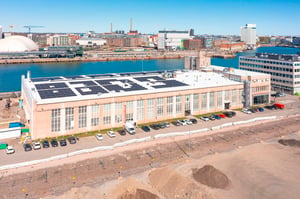
The Henry Ford Building was constructed in Helsinki's Hernesaari district between 1943 and 1946 as the headquarters and vehicle assembly plant of Oy Ford Ab. Designed by architect Gunnar Nordström, the building served as Ford’s headquarters until 1997. Today, the protected former factory serves as a versatile commercial property.
RETHINKING ENERGY EFFICIENCY
How do you bring a nearly 80-year-old building in line with today’s highest energy-efficiency standards?
Cobbleyard Real Estate, the owner of the Henry Ford Building, undertook a major programme to improve the historic property’s energy performance and reduce its operating costs. At the same time, the aim was to support the property's long-term value and attractiveness to tenants.
The starting point was challenging: the building had a G energy rating, the lowest rating on Finland’s energy performance certificate scale. The goal was to achieve an A energy rating while preserving the building’s historic character.
Achieving this required a comprehensive energy renovation combining several complementary solutions. The building’s ventilation and building automation systems were upgraded to modern standards, and a ground-source heat pump system was installed. To generate renewable electricity on site, Helsinki city centre's largest rooftop solar PV system was installed on the building.
"The solar PV system was a key part of the Henry Ford Building’s redevelopment and its journey towards an A energy rating. The property’s large, recently renovated roof provided an ideal platform for a solar installation of this scale, designed to cover almost all of the property’s annual electricity consumption. We chose Solnet as our partner because they offered the best solution for a project of this scale,” says Juha Koskinen, Project Manager at Cobbleyard Real Estate.
"Although the Henry Ford Building is already more than 80 years old, its systematic redevelopment demonstrates that a historic property can also achieve high levels of energy efficiency. The energy investments we have now made will help secure a strong future for the property for at least the next 80 years."

A HIGH-PERFORMANCE ROOF COATING
Helsinki city centre's largest rooftop solar PV system
Solnet Group was responsible for the design, procurement and construction of the Henry Ford Building's 420 kWp rooftop solar PV system. Solnet will also be responsible for the system’s operation and maintenance.
The 420 kWp installation is the largest rooftop solar PV system in Helsinki city centre. It is expected to generate approximately 350 MWh of renewable electricity annually.
The installation of the solar PV system was coordinated with the building’s roof renovation. A light-coloured, air-purifying PolarTop Noxite roofing membrane was installed on the roof, helping to reduce its surface temperature. The membrane’s titanium dioxide coating uses UV light to catalyse the conversion of airborne nitrogen oxides into nitrates, which are then washed away by rainwater. Compared with a conventional black roof, the light-coloured surface can remain 15–25°C cooler, helping to reduce the building’s cooling demand while also supporting solar panel performance.
"The significant improvement in the building's energy rating takes us a major step towards our carbon neutrality targets for the property portfolio. The investment increases the property's attractiveness while delivering immediate cost savings, which made the decision to proceed with a project of this scale straightforward," says Koskinen.
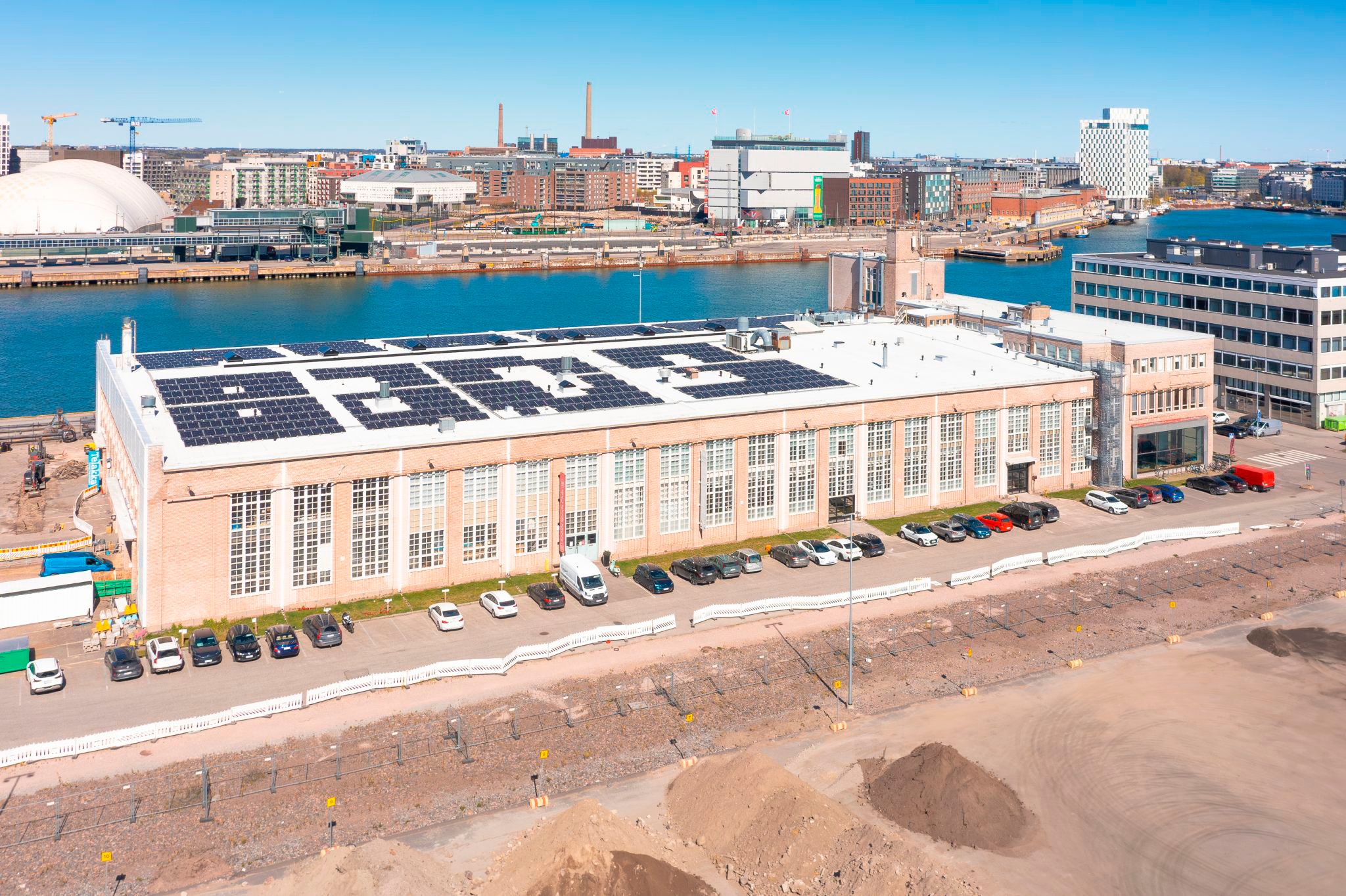
Photo: Cobbleyard Real Estate
FROM ENERGY RATING G TO A
Energy efficiency supports property value and competitiveness
Following the energy renovation, the Henry Ford Building moved from the lowest energy rating, G, to the highest, A. The scale of the improvement can be considered exceptional even by European standards. It demonstrates how existing building stock can be upgraded to meet today's energy efficiency requirements.
For property owners, energy efficiency means more than lower energy consumption. Strong energy performance can make a property more attractive to tenants and investors while supporting its value and access to financing. At the same time, lower operating costs and reduced reliance on grid-supplied energy help manage the property's costs over the long term.
The benefits are already visible at the Henry Ford Building. Occupancy has developed positively, and modern, energy-efficient solutions have been one of the factors contributing to the property's attractiveness to tenants.
Why does an A energy rating matter to financiers?
An A energy rating makes the impact of energy investments visible on the energy performance certificate and enables the building to be benchmarked against other properties. From the EU Taxonomy perspective, it serves as a practical signal: for buildings completed before 2021, achieving an A rating can satisfy the energy efficiency criterion. Alternatively, the criterion is met if the building’s operational primary energy consumption places it within the most efficient 15% of the national or regional building stock.
For lenders and investors, this is not just greenwashing but a concrete factor in assessing risk and return. Energy efficiency can influence loan terms, collateral valuation, and how the asset is positioned within sustainable finance products.
"Although the Henry Ford Building is already more than 80 years old, its systematic redevelopment demonstrates that a historic property can also achieve high levels of energy efficiency. The energy investments we have now made will help secure a strong future for the property for at least the next 80 years," Koskinen concludes.
Book a meeting with our experts
Want to achieve similar results? Book a free consultation!
