
_edited_150ppi_2000px_RGB.png?width=300&name=image%20(1)_edited_150ppi_2000px_RGB.png)
Solnet Group | 5 October 2026
Limited grid capacity is becoming an increasingly common challenge for new commercial developments across Europe. This project shows how Solnet used battery energy storage to help a commercial site manage grid constraints and reduce its dependence on additional grid and generator capacity while supporting its decarbonisation goals.
The challenge: Opening a new commercial site with limited grid capacity
What happens when a new commercial site is ready to open, but the available grid capacity isn't enough? One of Solnet's customers encountered exactly this challenge while preparing to open a new commercial site with continuous 24/7 electricity demand. Located in one of Europe's most grid-congested areas, the existing grid connection was too small to support the site's operations, and increasing the available grid capacity was not an option.
To enable the store to open on schedule, an on-site diesel generator was initially required. However, with strong ESG and decarbonisation targets, the customer needed a more sustainable long-term approach that would reduce its reliance on additional grid and generator capacity.
The solution: Making better use of the existing grid connection
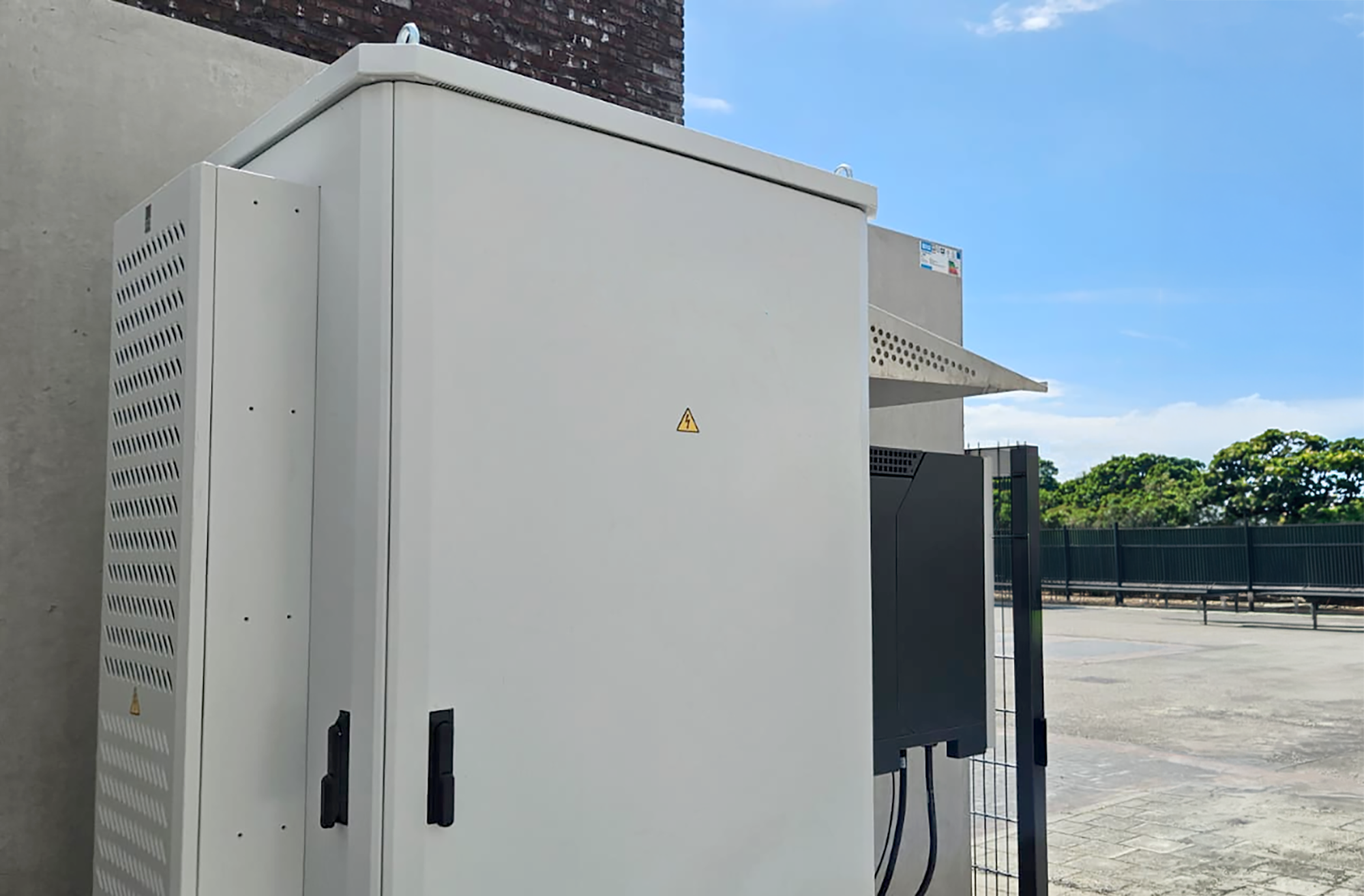
To address these challenges, Solnet, acting as the BESS EPC, designed, delivered and installed a battery energy storage system (BESS) tailored to the customer's energy demand profile.
The battery charges during periods of lower electricity demand, typically overnight, and applies peak shaving during demand spikes, allowing the site to remain within the limits of its existing grid connection while reducing the amount of additional capacity required from the on-site generator and maintaining reliable operations.
“Every project starts with understanding the customers’ energy needs and usage. In this case, battery storage provided the reliable power needed while making the best possible use of the existing grid connection, supporting both the customer's operational needs and sustainability goals”, says Quirijn van Toledo, Project Manager at Solnet Group.
The result: Reduced dependence on additional grid and generator capacitys
Across Europe, businesses are increasingly facing similar challenges as grid congestion and limited grid capacity become barriers to growth and electrification. Rather than waiting for grid upgrades, battery energy storage is helping organisations make better use of existing grid connections and reduce their dependence on additional grid and generator capacity.
With the BESS now in operation, the customer has been able to reduce its reliance on the temporary diesel generator while continuing to operate within the limits of its existing grid connection. The result is uninterrupted operations, lower emissions and another example of how battery energy storage helps businesses continue operating and further decarbonise their footprint despite grid constraints.
For Van Toledo, projects like this demonstrate the growing role of battery energy storage as grid constraints continue to affect businesses across Europe. “Battery energy storage is no longer only about energy optimisation. Projects like this demonstrate how businesses can sustainably move forward with new developments without having to wait for grid upgrades. They can also create a pathway towards future generator-free operation when combined with additional on-site generation, such as PV.”
––––––––––––––––––––––––––––––––––––
Planning a new commercial or industrial development in an area with limited grid capacity?
Contact our team to discuss how battery energy storage could help your project move forward while reducing its dependence on additional grid and generator capacity.
COMMENTS